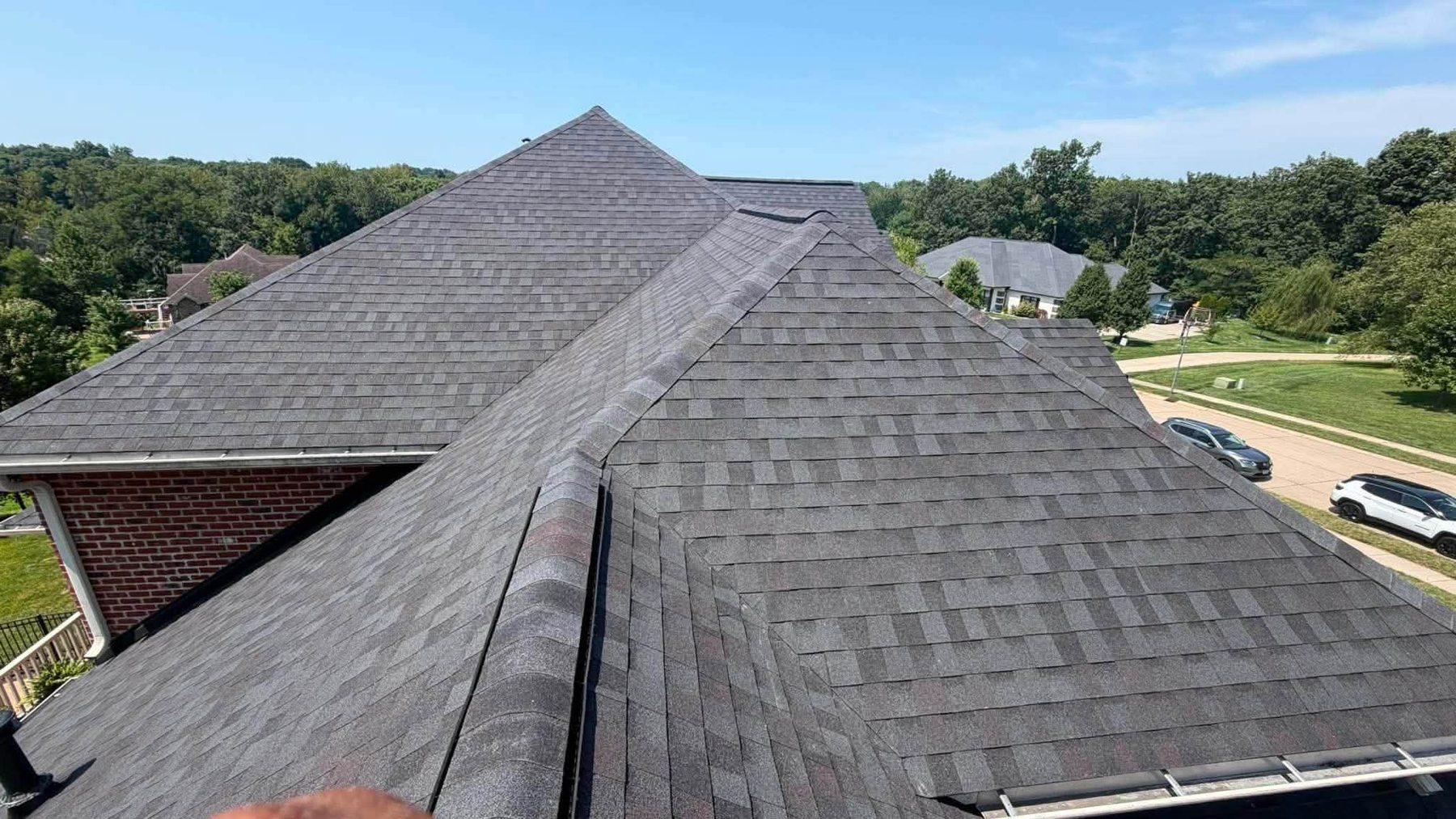
Roof
Missing, cracked, or curled shingles. Bruised mats. Granule loss in gutters. Lifted flashing around chimneys, vents, and valleys.
Hail and wind can leave marks you do not notice from the driveway. A free inspection gives you a clear picture of the exterior’s condition, and whether insurance may be part of the conversation.
Not every mark means a full replacement. We separate cosmetic wear from damage that needs attention.
Missing, cracked, or curled shingles. Bruised mats. Granule loss in gutters. Lifted flashing around chimneys, vents, and valleys.
Dents, cracks, loose panels, or damaged corners and window trim after hail or high wind.
Dented runs, pulled hangers, bent downspouts, or soffit and fascia that took a hit at the roofline.
Cracked glass, damaged screens, or seals that fail after a storm and leave rooms draftier than before.
Not sure what’s covered? We’ll assess the damage and help you navigate your insurance claim, without pressure and without overpromising what the insurer will decide.
Inspect the property, document visible storm-related conditions, explain what we find, and help you understand how that may relate to a claim conversation.
Coverage, claim approval, and payment decisions stay with your insurance company. We support the process. We don’t make the coverage call.
We document what hail or wind left behind on the roof and surrounding exterior.
We walk through the findings so you can talk with your insurer from a clearer place.
Repair, partial scope, or a larger project. You choose the path once the options are clear.
Hail and wind can shorten a roof’s service life even when the house stays dry today. Left alone, small exterior hits often turn into bigger problems later.
Hail can bruise shingles and knock away granules that shield the asphalt underneath. Once that armor is gone, UV and weather break the roof down faster.
Wind-lifted edges, cracked mats, and damaged flashing create openings that may not leak right away, then show up as stains, soft decking, or interior damage seasons later.
What starts as scattered impact marks can age into premature roof failure. Catching it early usually means a clearer scope, fewer surprises, and a healthier exterior over time.
Hail, wind, and insurance claims raise a lot of questions. Here are the ones we hear most often after a storm in the St. Louis area.
Some signs are easier to spot than others. Dented gutters, downspouts, and roof vents can indicate that your home was hit by hail. Damage to the shingles themselves can be harder to see from the ground.
Hail can knock away protective granules or damage the shingle underneath, even when everything looks fine from your driveway. A roof inspection can help determine whether the storm caused actual damage or if your roof is still in good condition.
Yes, especially after a significant hailstorm.
A roof doesn’t have to be leaking to have hail damage. Shingles can lose their protective granules or sustain damage that doesn’t cause an immediate problem. Over time, those areas can become more vulnerable to leaks. A free inspection after a storm gives you a clear picture of whether anything needs attention now.
Hail damage doesn’t always cause an immediate leak. Sometimes the damage starts with missing granules or bruised shingles that gradually deteriorate.
Over time, those areas can become more vulnerable to water intrusion, leaks, and premature roof failure. Waiting too long can also create complications with your homeowners insurance, particularly if your policy has deadlines for reporting storm damage.
If you think your roof has hail damage, it’s worth having it inspected before a small problem turns into something bigger.
Many homeowners insurance policies cover roof damage caused by hail or wind, but every policy is different.
Coverage depends on factors like your deductible, the type of policy you have, the age and condition of your roof, and what caused the damage. We can inspect your roof, take photos, and provide documentation of any storm damage we find. Your insurance company makes the final decision on coverage.
Absolutely. If you’ve never dealt with a roof insurance claim before, the process can be confusing.
We can document the damage, meet with your insurance adjuster, review the roofing work included in the insurance estimate, and provide additional construction documentation when needed.
While your insurance company makes the coverage decisions, we’ll help with the construction side of the process so you know what work is being proposed and why.
Yes. We inspect roofs throughout the St. Louis area for damage caused by hail, wind, and severe weather.
We’ll look for damaged or missing shingles, granule loss, and damage to vents, flashing, and other roofing components. We’ll also take photos so you can see what we’re seeing. If we find storm damage, we’ll explain what it means and go over the next steps with you.
Yes. Hail can crack or puncture siding, and strong winds can loosen panels or pull them away from your home.
Some storm damage is obvious. Other damage can be harder to spot, especially around corners, trim, and higher areas of the house. We inspect siding throughout the St. Louis area, take photos of what we find, and explain whether anything needs to be repaired or replaced.
Yes. We can document the damage, meet with your adjuster, review the proposed repair work, and provide additional construction documentation when needed.
Matching older siding can sometimes be a challenge, especially when a product or color has been discontinued. We can help document those issues and explain the available replacement options. Your insurance company makes the coverage decisions.
Absolutely. Hail can dent gutters and other metal components, while wind may loosen or remove panels and trim.
After a strong storm, it’s worth checking the whole exterior — not just the shingles on the roof.
Yes. We can inspect visible exterior damage, take photographs, meet with your adjuster when appropriate, and provide information about the construction work that may be needed.
Your insurance company decides what is covered under your policy.
Whether you’re checking for storm damage, exploring options, or just have a few questions, we’re here to help you find the right next step.
Or call (636) 297-1593